
Use-case assessment
A short list of the tasks worth automating, ranked by time saved and by the damage a wrong answer could do, with the ones to leave alone.
AI
AI automation for businesses that want language models to do real work inside their systems, safely, rather than another chatbot demo. As an AI automation consultant in South Africa who builds and runs MCP servers in production, Andre connects AI agents to your inboxes, data and tools, with the permissions, logging and tests that let you trust what they do.
AI agents and MCP servers connected to your real systems, with the guard rails to trust them.
A short list of the tasks worth automating, ranked by time saved and by the damage a wrong answer could do, with the ones to leave alone.
A Model Context Protocol server that exposes your systems to AI assistants through narrow, audited tools instead of open access.
An automated workflow that reads, decides and acts within limits you set, with a person approving anything that cannot be undone.
Automated checks run against real examples, so you can see how often the automation gets it right before and after every change.
A record of every action an agent takes, rate limits, and a switch to turn the automation off without a deployment.
A working session to choose one task with a clear before and after, and to collect real examples of it, good and bad.
Typically 1 to 2 days
A first version runs against your examples, and the evaluation tests show where it succeeds and where it fails.
Typically 1 week
Permissions, logging, error handling and human approval steps are added, and the tests become part of the pipeline.
Typically 2 to 4 weeks
The automation goes live with monitoring. Results are reviewed against the evaluation set, and the next task is chosen.
Ongoing
A fixed-price assessment and prototype, then the production build quoted as a fixed scope.
AI work starts small and fixed. The assessment and the prototype are quoted together at a fixed price, within two business days of the first conversation, and the production build is quoted only once the prototype has shown, on your own examples, that the task can be automated well enough.
The proof is in Tech Mage’s own products. Prubex is one MCP server for every inbox and calendar, and it went from a written specification to a paid launch in 9 days, with 150 of 150 requirements traced to tests. Tech Mage also runs AI agent operations in-house, so the guard rails described here are the ones used every day, not theory.
Tech Mage takes on a limited number of AI engagements, because each needs real examples and careful evaluation rather than a quick demo. Agents that touch production systems are best preceded by a code and security review of the systems they will use. When the automation needs a new application around it, see custom software development.
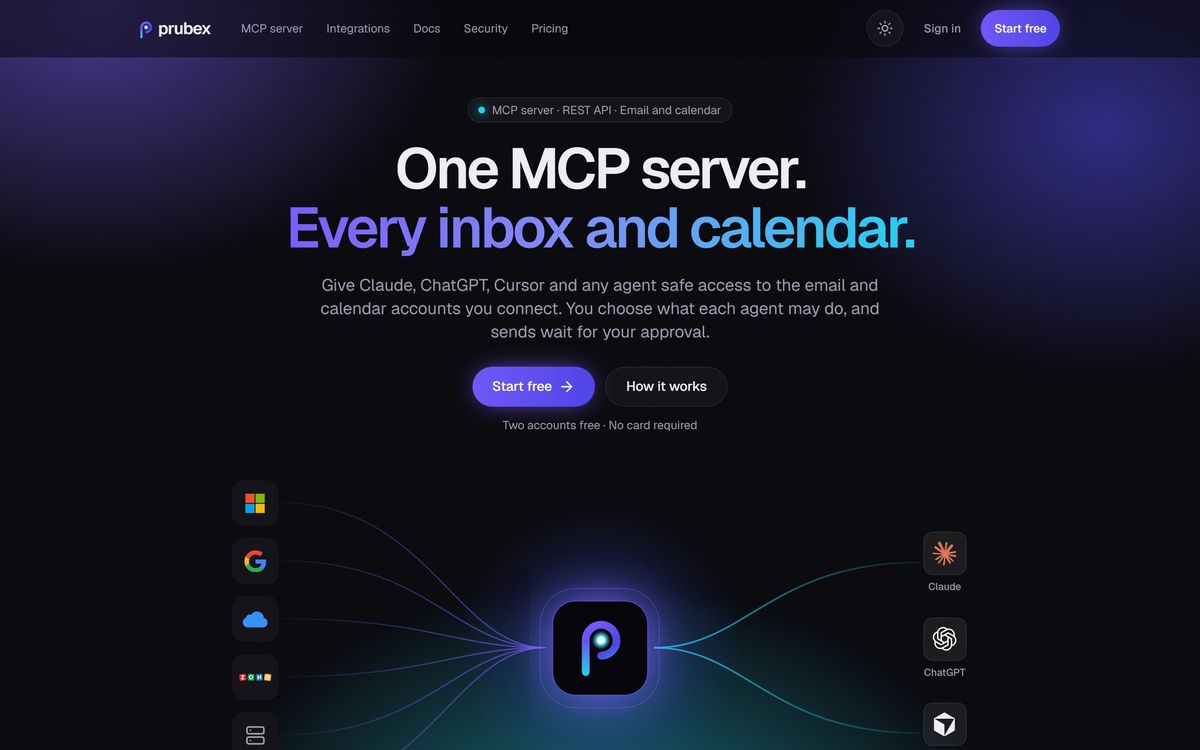
The Model Context Protocol is an open standard that lets AI assistants call tools and read data in a controlled way. An MCP server is the piece that exposes your systems through that standard.
The model is chosen for the task and for your data rules. The design keeps it replaceable behind one interface, so you are not tied to a single vendor.
Providers are chosen, and their terms checked, so that your data is not used for training, and only the fields a task needs are sent. Where that is not acceptable, the task stays manual.
The evaluation tests run on every change, and the logs show each action the agent took. If accuracy drops below the level you agreed, the automation can be paused.
Tell us what you need built or reviewed, and how soon you need it. You get a fixed-price quote within two business days.